Solar Automation Project
Building a Smarter and More Efficient Solar Management System
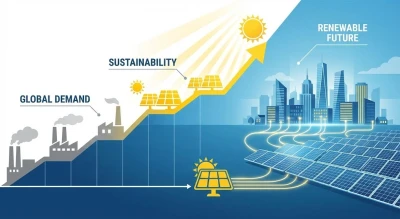
In today's world, the use of renewable energy is growing rapidly. Solar energy, in particular, is no longer simply an environmentally friendly alternative; it has become an effective and long-term energy solution for individuals, businesses, and organizations.
Along with this growing demand, the need for solar system management, customer management, monitoring, reporting, and automation is also increasing. To address these needs, AppTheta developed the Solar Automation Project, a technology-driven solution designed to make solar-related business operations and customer management more organized and efficient.
As part of this project, Limon Hossain worked as an intern and gained hands-on experience by contributing to various technical and development-related activities throughout the internship period.
What Is the Solar Automation Project?
The Solar Automation Project is a centralized management solution that helps manage different operational activities of a solar business through a structured digital platform.
In a solar business, managing customer information, solar system details, service activities, payment or transaction information, follow-ups, reports, and other operational data separately can require significant time and resources.
The project was designed to reduce these challenges by providing an automation-based system where essential information can be managed from a centralized platform.
The CRM component of the project is associated with crm.apptheta.com, with a focus on managing customer and business-related information in a more organized and manageable way.
Key Objectives of the Project
The primary objective of the Solar Automation Project is to simplify manual and repetitive tasks through software-based automation.
The project focuses on several important areas:
- Centralized storage of customer information
- Easy management of solar-related customer data
- Automation of different business operations
- Simplified customer follow-up and service management
- Generation of useful reports from business data
- A more organized overall business workflow
- Reduced manual data entry and repetitive tasks
- Faster access to important management information
This allows a solar business to manage its daily operations in a more systematic and efficient manner.
The Role of the CRM System
Customer relationships are extremely important in the solar business. Information such as when a customer purchased a solar system, what type of system they use, when service may be required, and previous communication needs to be stored accurately.
A CRM-based system helps manage this information from a centralized location.
With a platform such as crm.apptheta.com, customer-related information can be organized in one place, allowing business teams to access the data they need and improve customer communication and service management.
It also makes it easier to manage not only new customers but also the service and ongoing relationships of existing customers.
Why Automation Matters
In a traditional business workflow, many activities have to be performed manually, such as updating customer information, following up with customers, maintaining transaction records, and preparing reports.
Automating many of these activities can save employees valuable time and reduce the possibility of human error.
One of the key goals of the Solar Automation Project is to simplify these repetitive workflows through software.
Automation results in:
Less Manual Work → Faster Processing → Better Data Management → Improved Customer Service
This workflow can play an important role in improving overall business productivity.
Limon Hossain's Internship Experience
During the development journey of this project, Limon Hossain had the opportunity to work as an intern.
Working on a real-world software project provided him with an important learning opportunity. Beyond academic and theoretical knowledge, he was able to understand how a production-oriented project is planned, developed, maintained, and improved in a professional environment.
Through different development-related tasks, he gained practical knowledge of software development workflows. He also experienced working with a team, understanding an existing codebase, working on features, and following the structure of a larger software project.
Learning from a Real-World Project
One of the most valuable aspects of an internship is learning how to solve real-world problems.
In tutorials or small demo projects, requirements are usually limited. However, a real-world project requires consideration of different business requirements, existing functionality, database structure, user requirements, and future scalability.
Working on the Solar Automation Project helped Limon Hossain gain a better understanding of a real-world development environment.
He learned that professional software development is not limited to writing code. It also involves understanding requirements, logical thinking, debugging, testing, teamwork, code organization, and continuous improvement.
Teamwork and Collaboration
Although a software project can sometimes be developed by a single developer, teamwork is essential in a professional environment, especially for larger projects.
While working on the Solar Automation Project, coordination with different team members, understanding assigned tasks, and following the development workflow were important parts of the experience.
This type of collaborative environment is especially valuable for an intern because it provides insight into how a professional development team works together to achieve a project's goals.
Technology and Development Approach
The Solar Automation Project places importance on modern web development practices and a structured software development approach.
The development process places importance on clean code, reusable functionality, database management, security, and maintainability.
For a CRM-based system to remain useful over the long term, creating functionality alone is not enough. It is also important to consider how the system can be updated and expanded to support future requirements.
Benefits for the Business
A centralized system such as the Solar Automation Project can provide several benefits for the daily operations of a solar business.
First, different types of customer and business information can be accessed from one place, reducing the need to rely on separate sources or manual documents.
Second, automation can reduce repetitive tasks, allowing employees to spend more time on important business activities.
Third, structured data management allows the management team to access important information and reports more quickly.
Most importantly, an organized CRM system can help improve the overall customer experience.
From Internship to Professional Growth
For Limon Hossain, the internship on the Solar Automation Project was more than an academic requirement; it was an important step toward experiencing a professional software development environment.
By working on a real-world project, an intern can understand how theoretical knowledge is applied to solve practical problems.
This type of project experience can play an important role in developing a future developer's technical skills, problem-solving ability, communication skills, and professional mindset.
Future Possibilities
As the solar energy sector continues to grow, the demand for technology-driven management solutions is also expected to increase.
In the future, the Solar Automation Project can be further enhanced with advanced monitoring, automated notifications, analytics, smart reporting, customer communication, and additional automation features.
By following a scalable architecture, it will also be easier to add new functionality to the system as future business requirements evolve.
Conclusion
The Solar Automation Project is a technology-driven initiative focused on making customer management and operational workflows in the solar business simpler, more organized, and more efficient.
For Limon Hossain, contributing to this real-world project has been an important part of his professional development. Working with a production-oriented CRM project gave him valuable exposure to practical software development workflows, teamwork, and problem-solving.
A real-world software solution such as the AppTheta crm.apptheta.com project is not only valuable for solving business challenges; it also creates opportunities for young developers to work with real technology, requirements, and professional development practices.
At the intersection of solar energy and digital transformation, the Solar Automation Project has strong potential to evolve into an even more advanced and intelligent solution in the future.